


Material Waste Can Destroy Your Building Budget

When homeowners prepare a budget for a building project, they usually focus on the obvious costs such as bricks, cement, roofing, windows and labour. What many don't realise is that material waste can quietly consume thousands, or even hundreds of thousands of rands over the course of a project.
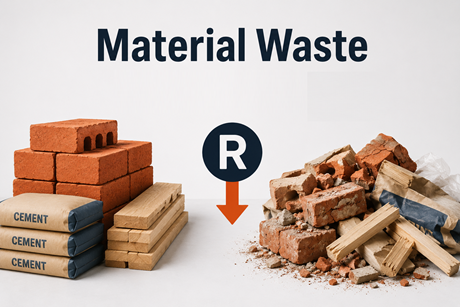
Some waste is unavoidable, but excessive waste is often the result of poor planning, inaccurate estimating, bad workmanship or inadequate site management.
Understanding where waste occurs can help you control costs and keep your project on budget.
What Is Material Waste?
Material waste is any building material that is purchased but never forms part of the finished building.
This may include materials that are:
Damaged
Broken
Stolen
Ordered in excess
Incorrectly installed
Cut incorrectly
Left unused at the end of the project
Every wasted bag of cement, brick, roof tile or sheet of plasterboard represents money that has been spent but adds no value to your home.
Why Waste Happens
Many people assume waste only occurs because workers are careless.
In reality, waste can occur long before construction even begins.
Some of the most common causes include:
Poor estimating
Incorrect material quantities
Design changes during construction
Poor workmanship
Inadequate supervision
Material theft
Poor storage on site
Weather damage
Ordering the wrong products
Most building projects experience some degree of waste, but careful planning can significantly reduce it.
Inaccurate Estimating
One of the biggest causes of unnecessary spending is inaccurate material estimation.
Ordering too much means money is tied up in materials that may never be used.
Ordering too little creates delays while additional materials are purchased, often at higher prices due to transport costs and smaller order quantities.
Professional estimators calculate quantities from building drawings to provide realistic material requirements before construction begins.
Poor Storage
Building materials left exposed to the weather can quickly become unusable.
Examples include:
Cement damaged by moisture
Timber warping in the sun or rain
Plasterboard absorbing water
Insulation becoming wet
Paint exposed to excessive heat
Simple storage measures can prevent significant losses.
Theft
Unfortunately, theft remains a challenge on many construction sites.
Materials commonly targeted include:
Cement
Bricks
Steel
Electrical cable
Plumbing fittings
Tools
Good site security and careful stock control help minimise these losses.
Bad Workmanship
Poor workmanship often creates waste that homeowners never see.
Examples include:
Brickwork demolished because it was out of line
Incorrectly installed roof trusses
Plumbing installed in the wrong position
Electrical conduits requiring relocation
Tiles laid unevenly and removed
Concrete that has to be broken out and replaced
Every time work has to be redone, both labour and materials are lost.
Last-Minute Design Changes
Changing your mind after construction has started can become very expensive.
For example:
Moving a wall
Enlarging a window
Relocating a bathroom
Changing floor finishes
Selecting different roof materials
These changes often require completed work to be demolished and rebuilt.
Finalising your design before construction begins helps minimise costly rework.
Ordering the Wrong Materials
Mistakes sometimes happen when ordering materials.
Examples include:
Incorrect brick type
Wrong tile colour
Incorrect roof sheeting
Windows manufactured to the wrong size
Returning or replacing materials can delay the project and increase transport costs.
Carefully checking orders before delivery helps avoid unnecessary expense.
Small Losses Add Up
Many homeowners focus only on large items such as concrete or roofing.
However, small losses across dozens of different materials quickly accumulate.
Examples include:
Damaged bricks
Broken roof tiles
Wasted mortar
Off-cuts of timber
Excess paint
Broken floor tiles
Damaged insulation
Individually these losses seem insignificant, but together they can have a noticeable impact on the project budget.
Can Waste Be Eliminated Completely?
No.
Every construction project includes a small amount of unavoidable waste.
Materials often need to be cut to size, some products may arrive damaged, and certain items naturally include a small wastage allowance.
The goal is not to eliminate waste completely, but to keep it within reasonable limits through good planning and proper site management.
How to Reduce Material Waste
Homeowners can significantly reduce waste by following a few simple principles:
Finalise the design before construction starts.
Obtain accurate material estimates.
Use experienced contractors.
Store materials correctly.
Secure the construction site.
Check deliveries carefully.
Avoid unnecessary design changes.
Monitor material usage throughout the project.
Good planning almost always costs less than correcting mistakes later.
Why a Bill of Quantities Helps
A professionally prepared Bill of Quantities (BOQ) helps reduce waste before construction even begins.
By accurately calculating material quantities from the building plans, a BOQ helps ensure that builders price the same scope of work and order realistic quantities of materials.
It also makes it easier to identify unusually high material allowances or missing items before work starts, helping homeowners compare quotations more fairly and reducing the likelihood of costly surprises during construction.
At Intellibuild, we prepare detailed building estimates that help homeowners, contractors and developers budget more accurately, reduce unnecessary material waste and make informed decisions before construction begins. A well-planned project doesn't just save money it gives you greater confidence from the first brick to the final handover.


Comments