


Do You Need Approval for New Windows or Doors?
- Deen Gabriel

- May 6
- 2 min read
Homeowners often assume that adding a small window or swapping a window for a sliding door is a "minor" DIY task that doesn't concern the local municipality.
However, in South Africa, the National Building Regulations and Building Standards Act is very clear: almost any change to the external "envelope" of your home requires formal authorization.
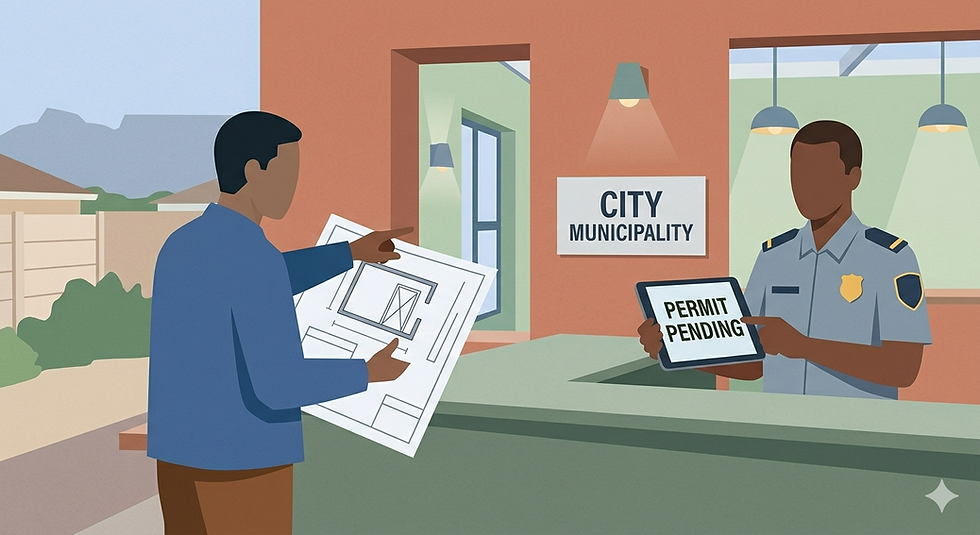
Here is a breakdown of why this matters and how to stay on the right side of the law.
Why the Council Cares About a Window
It might seem like a simple aesthetic choice, but the municipality views external wall modifications through three critical lenses:
Structural Integrity: External walls are often load-bearing. Cutting a new hole requires a lintel (a horizontal support beam) to be installed. If done incorrectly, the wall above can crack or collapse.
Fire Safety: Regulations dictate how close windows can be to a boundary line. This prevents fire from jumping easily from one house to another.
Energy Efficiency (SANS 10400-XA): South African law now regulates the "glazing ratio" of a home. Too much glass can lead to heat loss in winter or overheating in summer, forcing the grid to work harder for heating and cooling.
The "Minor Building Work" Route
The good news is that adding a door or window often falls under Minor Building Work. This is a simplified application process that is faster and more affordable than submitting full architectural plans.
When you can usually use a Minor Works application:
Converting an existing window into a door (without widening the opening).
Adding a single new window that does not fundamentally change the use of the room.
Internal alterations that don't affect the structural stability of the building.
When you need Full Building Plans:
Adding "floor area" (e.g., an enclosed patio with new doors).
Significant structural changes or removing large sections of load-bearing walls.
Alterations to Heritage Buildings (typically anything older than 60 years), which require additional permits from provincial authorities.
The Risk of "Building Dirty"
In a tight-knit neighborhood, "building dirty" or building without a permit, is a significant risk.
Fines and Stop-Orders: If a neighbor reports the noise and an inspector visits, they can issue a "Cease Works" order and a heavy fine.
Selling Your Property: When you sell your house, the buyer’s bank will require approved up-to-date plans. If your sliding doors aren't on the plan, the sale can fall through, or you will be forced to pay for "as-built" plans at a premium.
Insurance Claims: If a wall collapses or a fire occurs and the cause is linked to an unapproved structural change, your insurance provider may legally decline the claim.
Professional Advice
While a building estimator can help you quantify the bricks, sand, and cement needed for the job, it is always wise to consult a registered professional, such as an architect or a senior draughtsperson, to verify the SANS 10400 requirements.
The Bottom Line: Before you pick up the hammer, head to your local municipal building office. A 15-minute conversation with a Building Control Officer can save you months of legal headaches later.



Comments