


All You Need to Know About Bricks

Bricks are one of the oldest and most widely used building materials in the world. From small residential homes to large commercial buildings, bricks form the backbone of many construction projects because they provide strength, durability, fire resistance, and thermal comfort.

However, choosing the correct brick is not always simple. In South Africa, bricks are commonly identified by different sizes, materials, and industry codes such as NFX, NFP, FBA, and others. Understanding these differences helps builders, homeowners, and professionals select the right product for the job.
What Are Bricks Made From?
The two most common brick materials used in construction are clay and cement-based materials.
Clay Bricks
Clay bricks are manufactured from natural clay that is shaped and fired at high temperatures in a kiln. The firing process hardens the clay and gives the brick its strength and durability.
Advantages of Clay Bricks
Excellent durability and long lifespan
Good fire resistance
Natural thermal properties, helping regulate indoor temperatures
Low maintenance
Available in different finishes and colours
Clay bricks are commonly used for external walls, internal walls, face brickwork, and structural applications.
Common South African clay brick categories include:
NFP
NFX
Face bricks (FBA, FBS, etc.)
Understanding Brick Codes
Brick codes are used to describe the type, quality, and intended use of bricks.
NFP Bricks (Non-Facing Plastered)
NFP stands for Non-Facing Plastered.
These bricks are designed to be covered with plaster or another finish. They are not manufactured to provide an attractive exposed surface.
Typical uses include:
Internal walls
External walls that will be plastered
Boundary walls that will receive a finish
General building work
NFP bricks are usually selected where appearance is not important because the brick will be hidden behind plaster.
NFX Bricks (Non-Facing Extra)
NFX stands for Non-Facing Extra.
NFX bricks are generally a higher-quality non-facing brick compared to standard NFP bricks. They have improved dimensional accuracy and strength characteristics.
Typical uses include:
Plastered external walls
Internal structural walls
Areas where better brick consistency is required
Because of their improved quality, NFX bricks are often preferred by contractors who want easier laying and better alignment.
FBA Bricks (Face Brick Appearance)
FBA stands for Face Brick Aesthetic.
These bricks are manufactured to be visible after construction. They have a more controlled appearance, colour, and texture.
Typical uses include:
Exposed face brick walls
Decorative brickwork
Feature walls
Homes where no plaster finish is required
Face bricks require careful selection because colour variation and texture become part of the final appearance.
Other Face Brick Categories
Other codes may include:
FBS – Face Brick Standard
Standard face bricks used for exposed brickwork where appearance and consistency are important.
FBX – Face Brick Extra
A higher-quality face brick with tighter manufacturing tolerances and a more uniform appearance.
Imperial Bricks
The term imperial brick refers to the traditional South African brick size that was historically based on imperial measurements.

A typical imperial brick is approximately:
222 mm long × 106 mm wide × 73 mm high
(Actual dimensions can vary slightly depending on manufacturer.)
Imperial bricks have been widely used in South Africa for many years and remain common in renovations and older buildings.
Advantages:
Familiar to many builders
Works well with traditional construction methods
Suitable for renovations where matching existing brickwork is required
Maxi Bricks
A Maxi brick is a larger-format brick designed to reduce the number of bricks required per square metre.
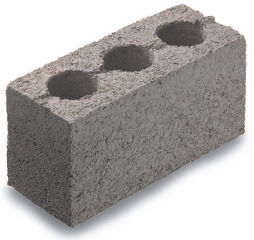
A typical Maxi brick is approximately:
290 mm long × 90 mm wide × 140 mm high
The larger size means:
Faster wall construction
Less mortar required
Reduced labour costs
Fewer joints in the wall
Maxi bricks are popular in modern construction because they can improve building speed.
A Maxi brick wall may look different from an imperial brick wall because of the reduced number of courses and joints.
Concrete Blocks
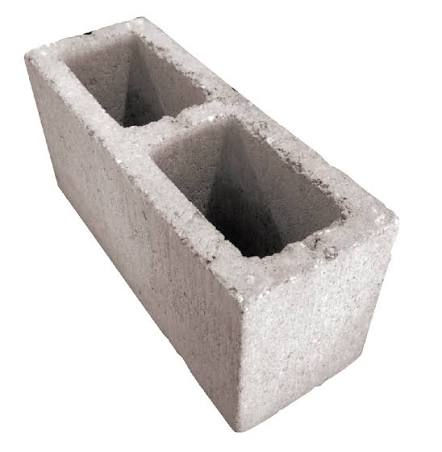
Concrete blocks, sometimes called cement blocks, are manufactured using cement, sand, and stone aggregates.
They are generally larger than standard bricks and are available in different thicknesses.
Common uses include:
Foundation walls
Retaining walls
Boundary walls
Industrial buildings
Large structural walls
Advantages:
Strong and durable
Fast installation due to larger size
Cost-effective for large areas
Available in different strengths
Concrete blocks can be solid or hollow.
Solid vs Hollow Blocks
Solid Concrete Blocks
Solid blocks contain concrete throughout their volume.
Used for:
High-strength applications
Heavy-load walls
Foundations
Hollow Concrete Blocks
Hollow blocks have internal cavities that reduce weight.
Benefits:
Easier handling
Lower material cost
Improved insulation
Faster construction
Brick Strength and Quality
Bricks are not only chosen by size and appearance. Their strength is also important.
Factors affecting brick performance include:
Manufacturing process
Material quality
Firing temperature (for clay bricks)
Cement mix design (for concrete products)
Water absorption
The correct brick must match the requirements of the building.
For example:
A decorative face brick may be selected for appearance
An NFP brick may be selected for a plastered wall
A stronger block may be required for structural work
Clay Brick vs Cement Brick: Which Is Better?
There is no single "best" brick. The correct choice depends on the project.
Clay Bricks
Best for:
Traditional homes
Face brick finishes
Long-term durability
Fire-resistant construction
Cement Bricks / Blocks
Best for:
Fast construction
Large structures
Cost-effective walling
Foundations and boundary walls
Brick Quantities and Building Estimates
When estimating brickwork, several factors must be considered:
Brick size
Wall thickness
Mortar joints
Wastage
Openings such as windows and doors
As a general guide, brick quantities differ depending on the brick type. A larger Maxi brick requires fewer units per square metre compared with a standard imperial brick.
A professional estimate should consider the exact manufacturer’s dimensions and project specifications.
Understanding bricks goes beyond simply choosing a colour or size. The difference between an NFP, NFX, FBA, imperial brick, Maxi brick, or concrete block affects the strength, appearance, cost, and construction speed of a building.
Choosing the correct brick ensures a better-performing structure, reduces unnecessary costs, and helps achieve the desired finish.
Whether building a new home, renovating an existing property, or preparing a construction estimate, knowing your bricks is an essential part of successful building.


Comments